Showing posts with label lamp-post. Show all posts

Saturday, December 21, 2013

Some More Lamp-posts, or Another Lamp-post Post (if you will)

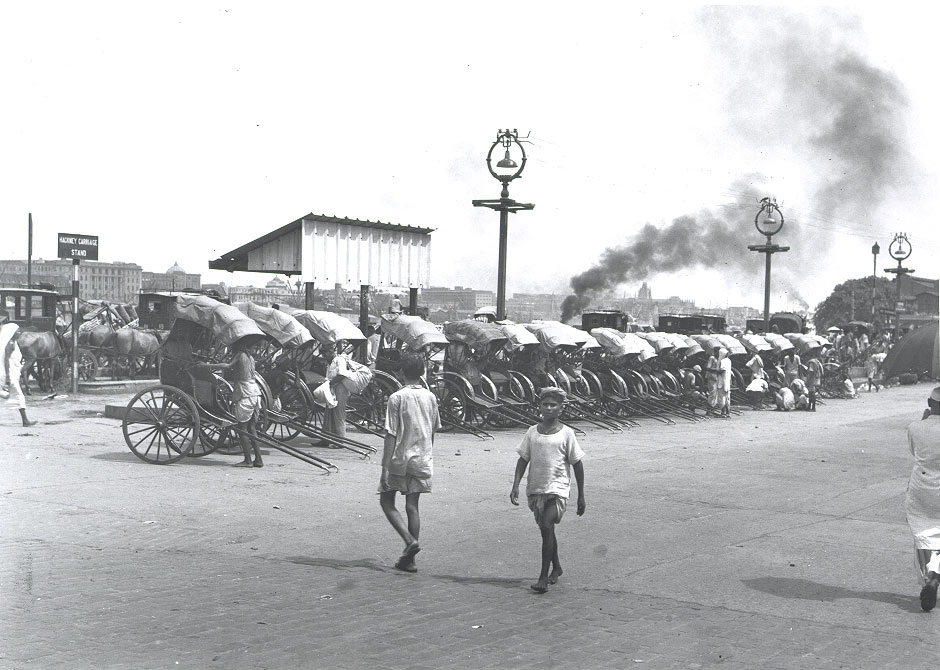
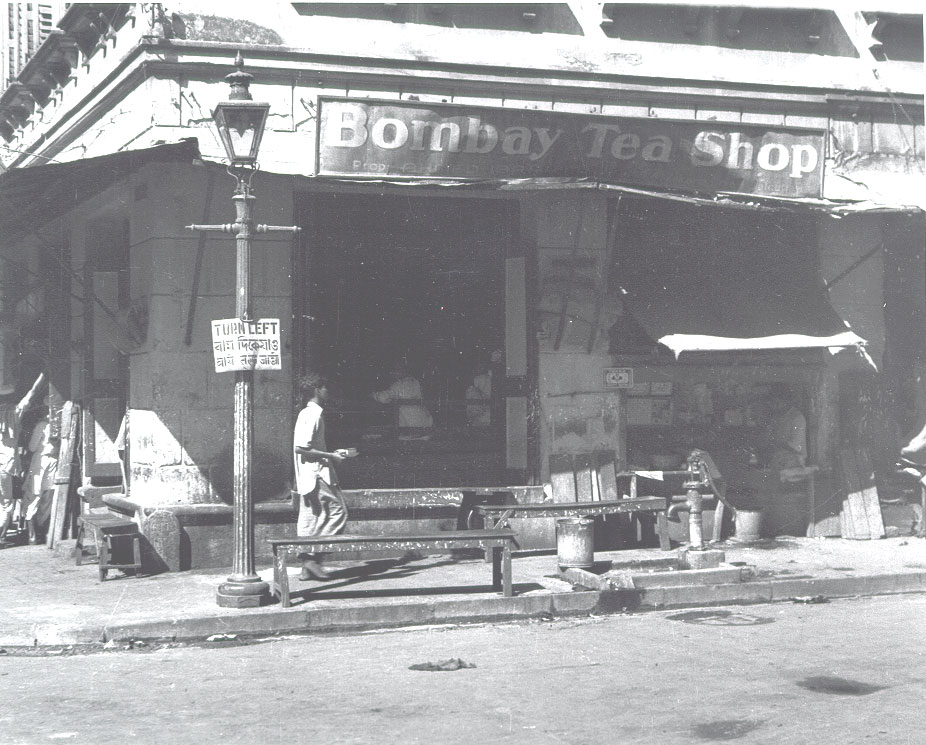
The Hensley Photo Library, University of Chicago, is a rich collection of photographs of Calcutta from 1943-44. They are a delight to browse through anyway. After the lamp-post in one of the photographs caught my eye, I kept looking for more varieties in each photograph.


Yes, the sign-board says Bombay, but this is obviously from Calcutta. The archivist also says so.

"Public transportation awaits passengers in front of Howrah Station, Calcutta, 1944."

The first one is of the Howrah Station. The second is at Sealdah. Are the lamp-posts different because they are meant to light up different kinds of spaces? The first sheds light on rickhsaw or other public transport stands, while the latter is street-lighting. The Sealdah Station looks very different now. I do not know how and when the transition took place. It seems Hensley may have caught another photographer in the act: what else could the person squatting in the foreground be doing?

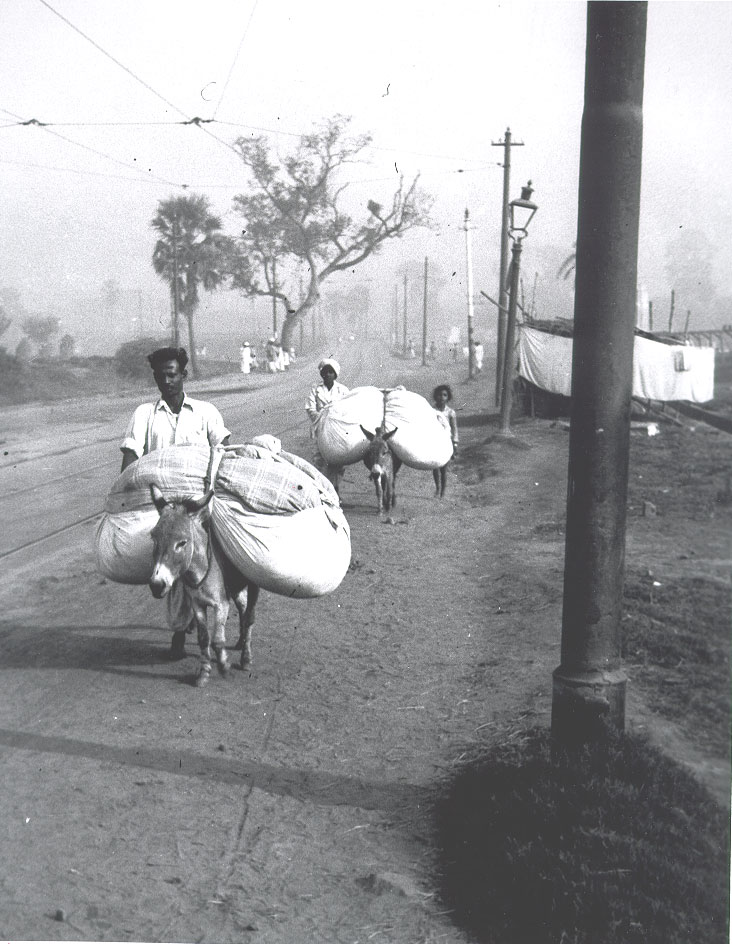
"Early morning scene along Diamond Harbor Road between Kidderpore and Alipore, Calcutta area"

This early morning scene echoes the lamp-post in the first photograph (in this post). You can almost smell the groggy freshness in the air. For the lamp too it seems too early to raise its head up absolutely straight. It's lazily tilted. Donkeys have become a rare sight in the city. A few days back I heard that the last donkey in Shantiniketan has died. Which broke my heart. Urbanisation and mechanisation are difficult conditions to survive in for a creature whose breeding, I suppose, came out of a largely utilitarian motive. Apart from carrying sundry load, they were also useful to dhoba-s or launderers (which may well be the subject of this photograph). They aren't very popular otherwise, are they? But they aren't even close to being endangered, and that is a relief.

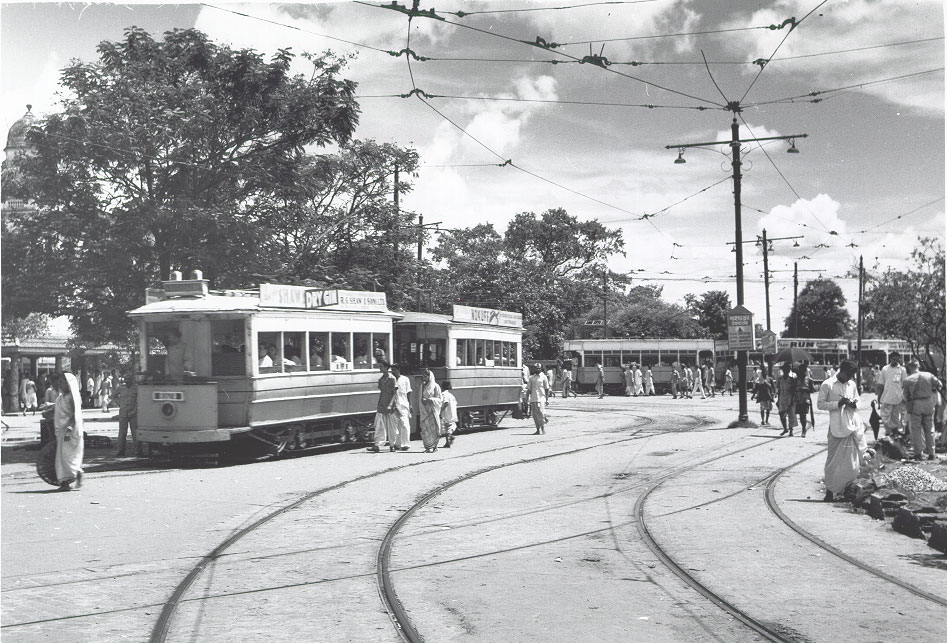
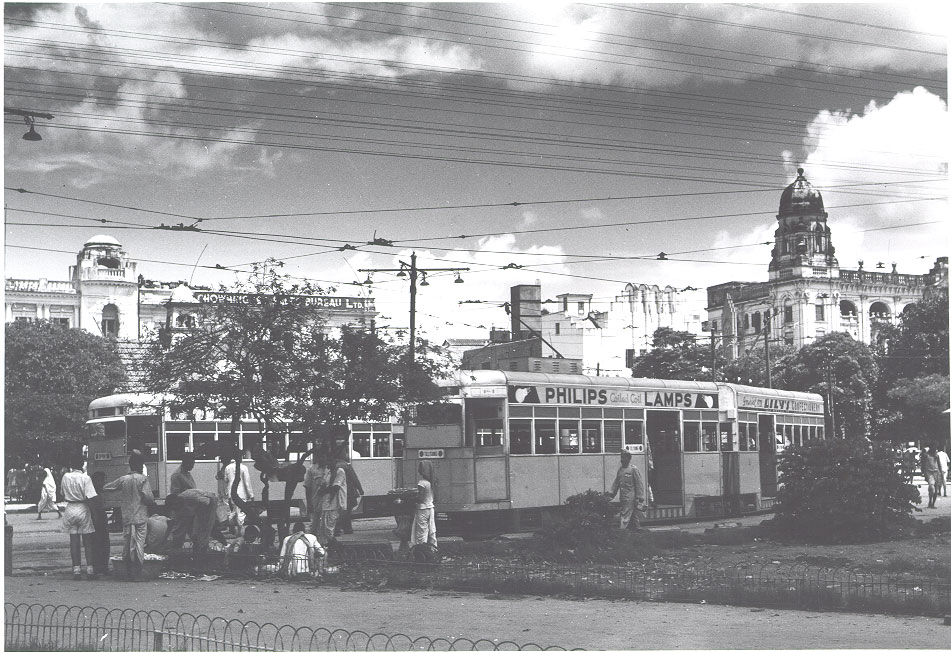
"Afternoon monsoon clouds form over the Maidan and Calcutta's downtown tram terminus, 1944."

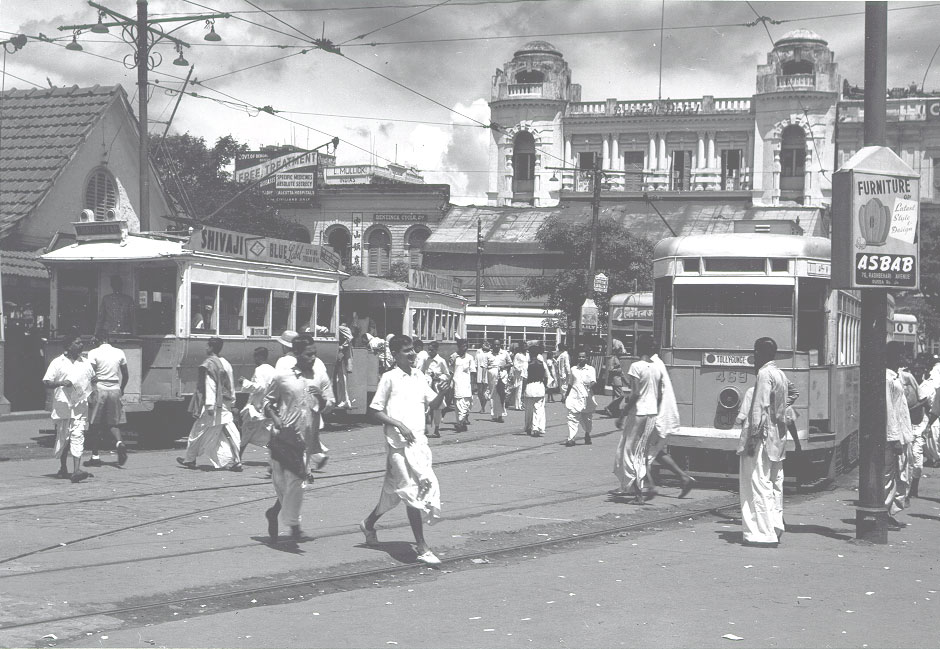
The last three here are all from the Tram Terminus. The first one has two lamps to a pole, while the other two have four to a pole. The last photograph I found quite striking, what with the monsoon clouds in the background.

P. T. Nair tells us that while Harrison Road was the first to receive electric lighting around the turn of the century, it was not until 1914 that major sections of the city came to be illuminated thus. With an increase in the number of buses and trams plying the roads, the CESC started paying greater attention to street-lighting around 1927. Up until the 1950s, we are told, there were 4 classes of electric lights: i) 75 watt single lamps for very narrow passages; ii) 100 watt single lamps for lanes with little motor traffic; iii) 3-75 watt cluster lamps for roads with moderate traffic; and iv) 3-100 watt cluster lamps for major roads where the traffic was heavy. The height of the last type would range between 25 and 30 feet, and they would be separated from each other by about 150 ft.

Hope you have fun going through the rest of the photographs in the Collection.
Tuesday, November 12, 2013

Lamp-post

If I am to believe my sources, I spent my first years in a house in Dhakuria. There are pictures of me in a house, but who is to tell it is the same one I am given to believe I was living in. The birth certificate, of course, mentions only the hospital. Be that as it may, I remember the days - as I am sure many of us do - when the streets around our house weren't so well-lit as they are today. It is tempting to embark on a history of street-lighting in Calcutta. P. Thankappan Nair has a wonderful section in his Calcutta Municipal Corporation at a Glance, but that can be reserved for another day, another discussion.

For now let me share this one photograph I clicked on my mobile camera today. Between Maharaj Thakur Road and Dhakuria Station Road there are several narrow lanes which run parallely (I didn't know until now that 'parallely' isn't a legitimate word)...so, narrow lanes which run parallel. One of these is the Kali Bari Lane, which I happened to take tonight on my way back. This is a few steps into the lane.


I am not sure if this was the only street lamp the lane had at one time or whether, when they were being replaced by the new ones, some nostalgic soul left this single lamp-post behind. It reminded me of Wall-E and EVE. (Ooh, did the worker who left it behind also defy orders from above, favouring sentiment? No. I'm romanticizing.) These lamps sometimes had wire-grid baskets to prevent the light-bulbs from getting borrowed. In the background you can see the Indian Oil building towering. The change in the colour of street lights is also visible. The main road is amber. This lane is white, fluorescent. I realized while passing through the lane that this is also where our old car mechanic, Rishi, had his workshop. Our Standard Super 10 or after that the Fiat Premier Padmini would occasionally force us to take a detour on our way to some place or the other, to stop here for some minor repair-work. I remember being told-off once when, while the Fiat (or was it the Super 10?) was malfunctioning somewhere near Gariahat (Ghatak Bari to be precise) and my father was trying his best to fix it, I was restricting my contribution to wisecracking. I had just started reading Hergé's Quick and Flupke series, and, drawing on recently acquired vocabulary, I was calling the car "Double Trouble".